Toowoomba works differently to most of south-east Queensland, and most of what's written about it online is written for somewhere else.
No obligation. Takes 30 seconds.

Tree Services Toowoomba connects Toowoomba and the Toowoomba region property owners with qualified, insured local arborists for council rules and related tree work. Tell us what the tree is doing and we'll match it to an operator who covers your suburb — free quote, no obligation.
Toowoomba Regional Council's current planning scheme does not require council approval to remove significant vegetation where no development is proposed. Council notes that when the scheme was prepared in 2010/2011, the vegetation protection controls administered by the Queensland State Government were considered sufficient.
That is genuinely different from Brisbane, Ipswich and Logan, where significant trees on private land are protected by local instruments. It is also different from what several tree-service websites covering this region tell you — which is part of why this page exists.
⚠️ It is not a blanket all-clear, and it is current at the time of writing. Confirm your own situation with council on 131 872 before anything comes down.
This is the one that catches people. Street trees and park trees are protected under Local Law 1 (Administration), and pruning, removing or otherwise interfering with one without prior written permission from council is an offence.
Being directly in front of your house, dropping leaves in your gutters, or blocking your view does not change that. If the tree is on the footpath side of your boundary, the conversation starts with council.
**Development.** Council's position applies where no development is proposed. Once clearing forms part of a development application, the vegetation is part of that assessment.
**Heritage.** Where a property is heritage listed, vegetation may be protected for historical purposes, largely through state agencies.
**Protected species.** Some plant species are protected under the Nature Conservation Act 1992, regardless of whose land they're on.
**State vegetation law.** Protection of vegetation on private land is administered by Queensland state departments rather than council, and an exemption or permit may be required depending on the circumstances — most relevant on larger rural lots.
Queensland has a dedicated law: the Neighbourhood Disputes (Dividing Fences and Trees) Act 2011. The tree-keeper — whoever owns the land the tree stands on — is responsible for branches overhanging a neighbour's land.
Where branches overhang by **more than 0.5m** and sit **less than 2.5m above the ground**, you can give a formal notice (Form 3) requiring their removal, and the tree-keeper is liable for your reasonable removal costs **up to $300**. Where the branches are **more than 2.5m above the ground**, that notice process doesn't apply and it becomes a QCAT application.
QCAT generally expects you to have tried to sort it out informally first. Cutting a neighbour's tree without following the process is a good way to end up liable yourself.
No published figure was available for any council fee or turnaround time for permission to work on a council tree, and we're not going to invent one. Nor will we list which specific species in this region are protected under the Nature Conservation Act, or tell you whether your particular block sits inside a biodiversity, bushfire or heritage overlay — that's property-specific and it's on council's planning maps.
For any of those: **Toowoomba Regional Council, 131 872**, 8.30am–5.15pm weekdays, or [email protected]. The call is free and it settles the question properly.
Toowoomba.
Where this job typically sits. Access is usually a bigger cost driver than size.
| Job | Indicative price | What moves it |
|---|---|---|
| Small tree removal (under 5m) | $250 – $700 | Ornamentals, young wattles and small garden trees with room to work around them. |
| Medium tree removal (5 – 15m) | $700 – $2,000 | The standard suburban job. Access moves this number more than height does. |
| Large tree removal (15m+) | $2,000 – $5,000+ | Mature gums, camphor laurels and bunya pines, usually dismantled in sections. |
| Escarpment / crane-access removal | $3,000 – $8,000+ | Steep blocks off the Range where there is nowhere to stand a machine and nowhere to drop. |
| Tree lopping / crown reduction | $300 – $1,200 | Bringing a canopy back off a roof or a boundary, cut to standard rather than topped. |
| Tree pruning / deadwooding | $250 – $800 | Clearance work and taking dead limbs out of a living canopy. |
| Stump grinding | $150 – $500 | Priced on diameter and access. Small stumps from around $80 – $150 if the machine fits. |
| Emergency / after-hours callout | $500 – $3,000+ | Storm make-safe. What it costs depends on what the limb is resting on. |
| Arborist report | $300 – $600 | For insurance claims, property sales, disputes and development applications. |
| Green waste removal / full clean-up | $200 – $800 | Added to the base quote when you want the timber gone rather than stacked. |
Prices are indicative only. Every tree is different — access, species, what's underneath it and whether the truck can get near it all move the number. You get a fixed written quote after an on-site assessment.
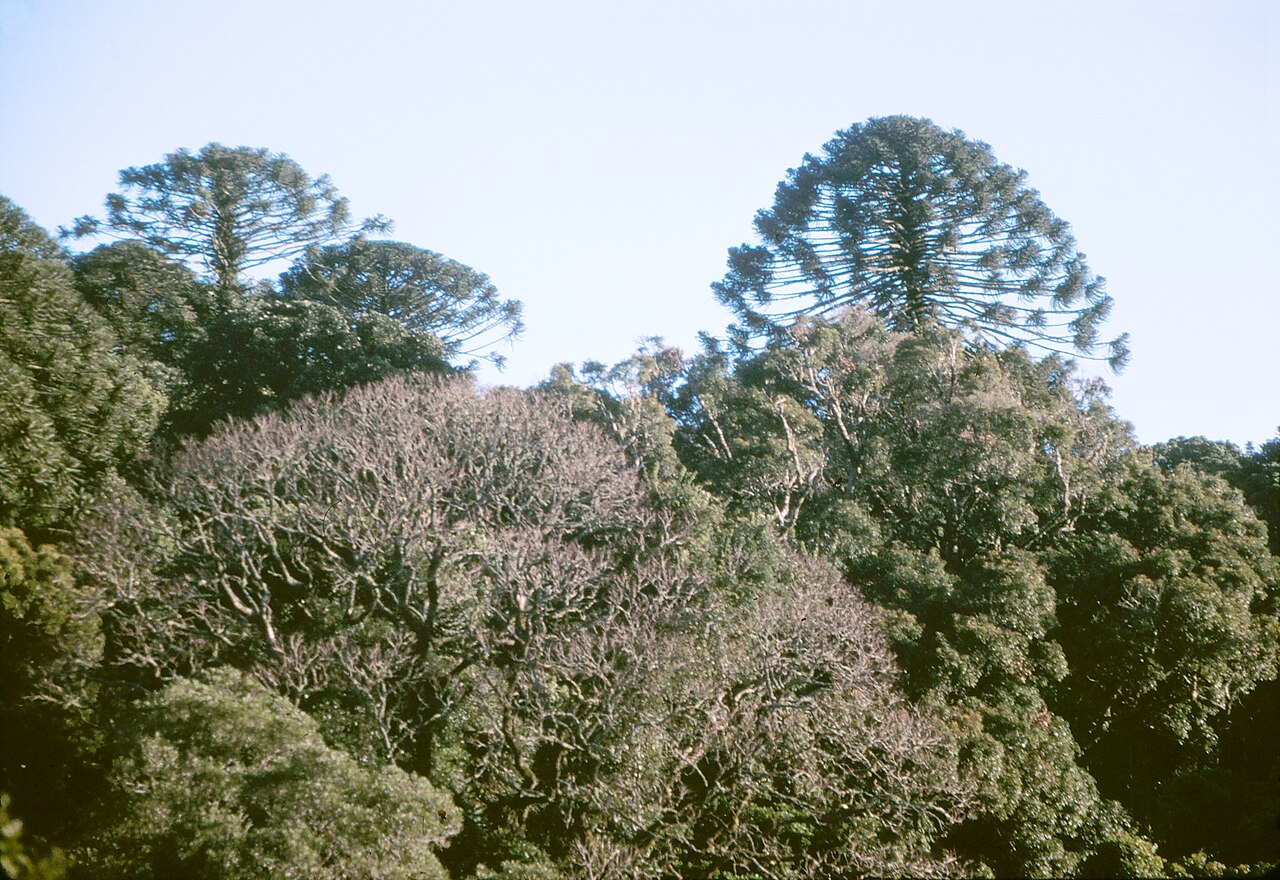
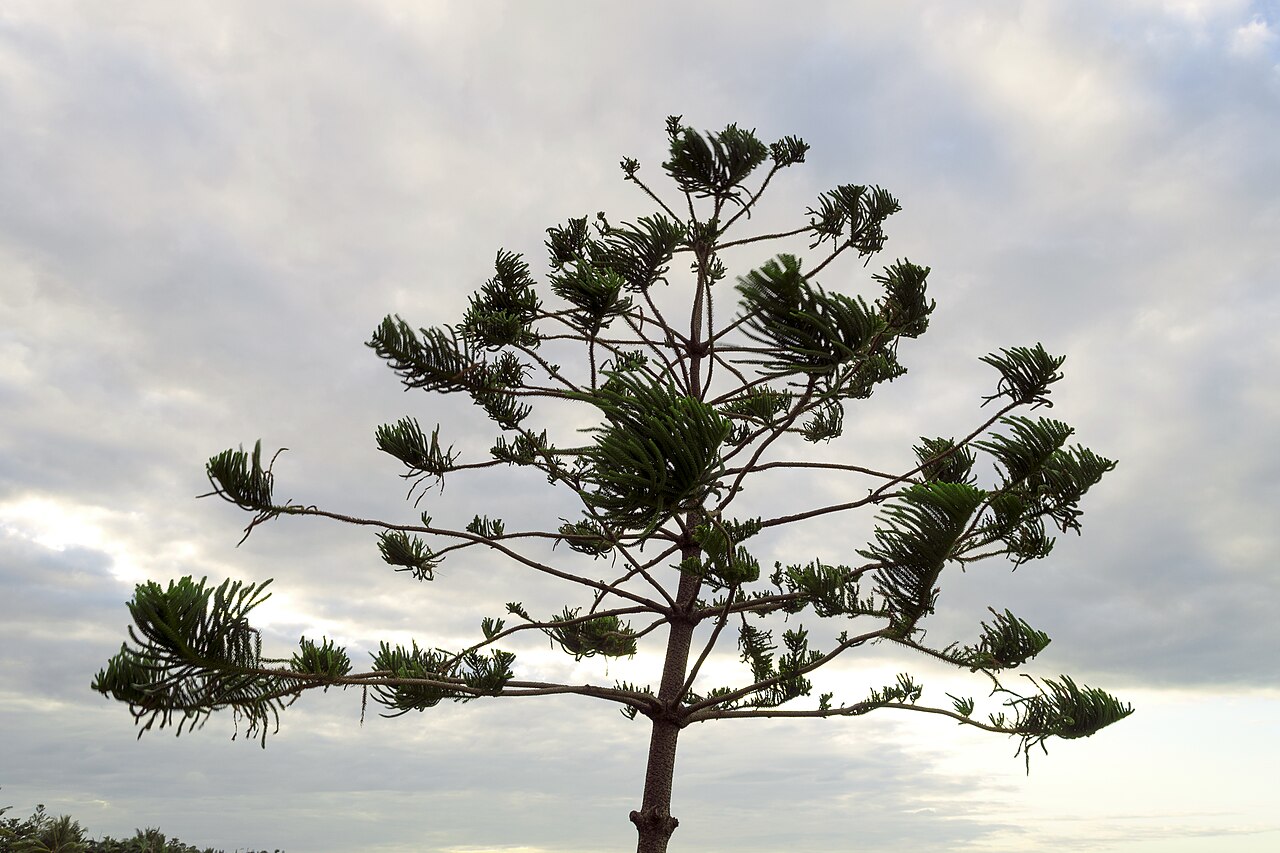
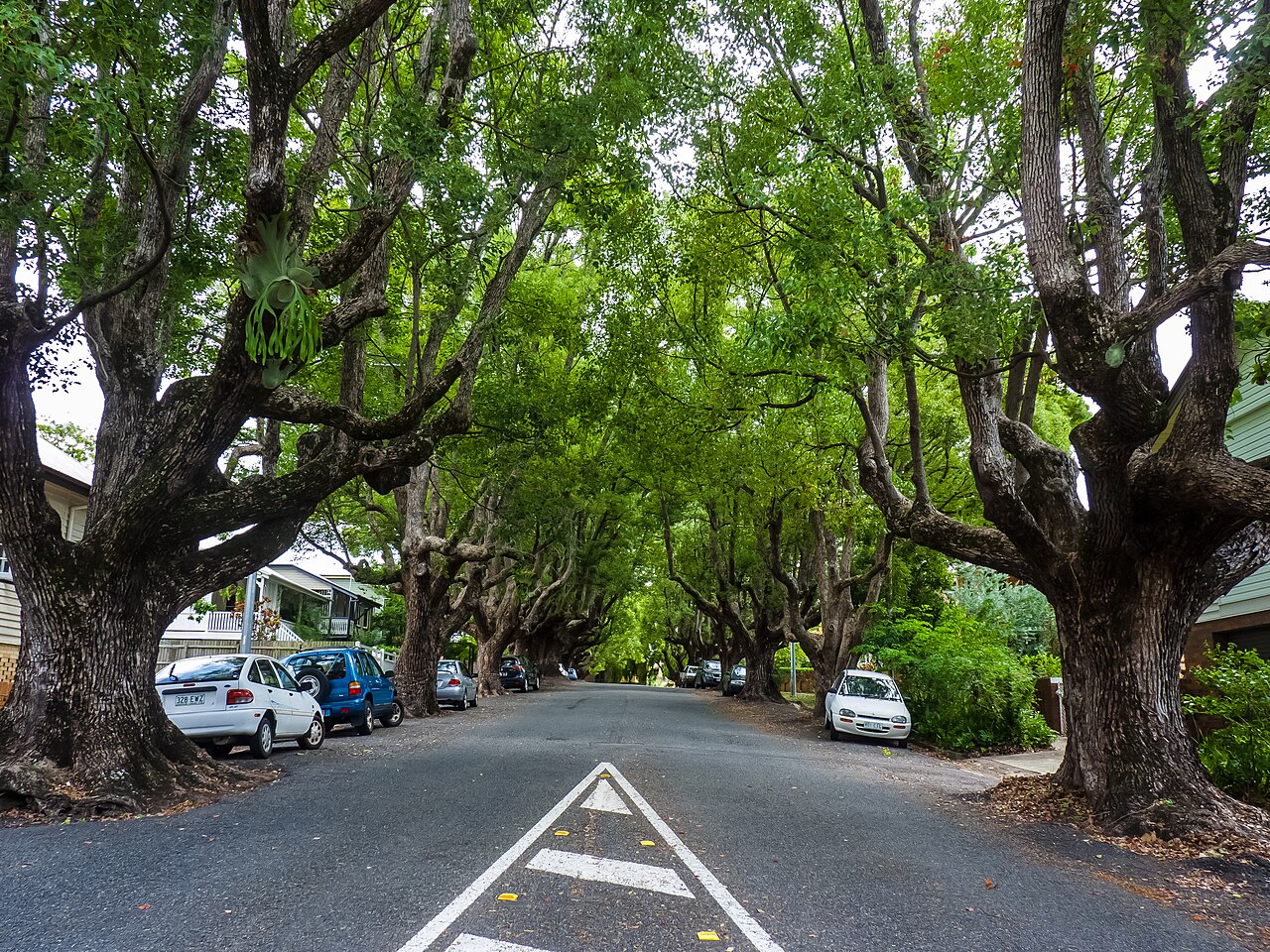
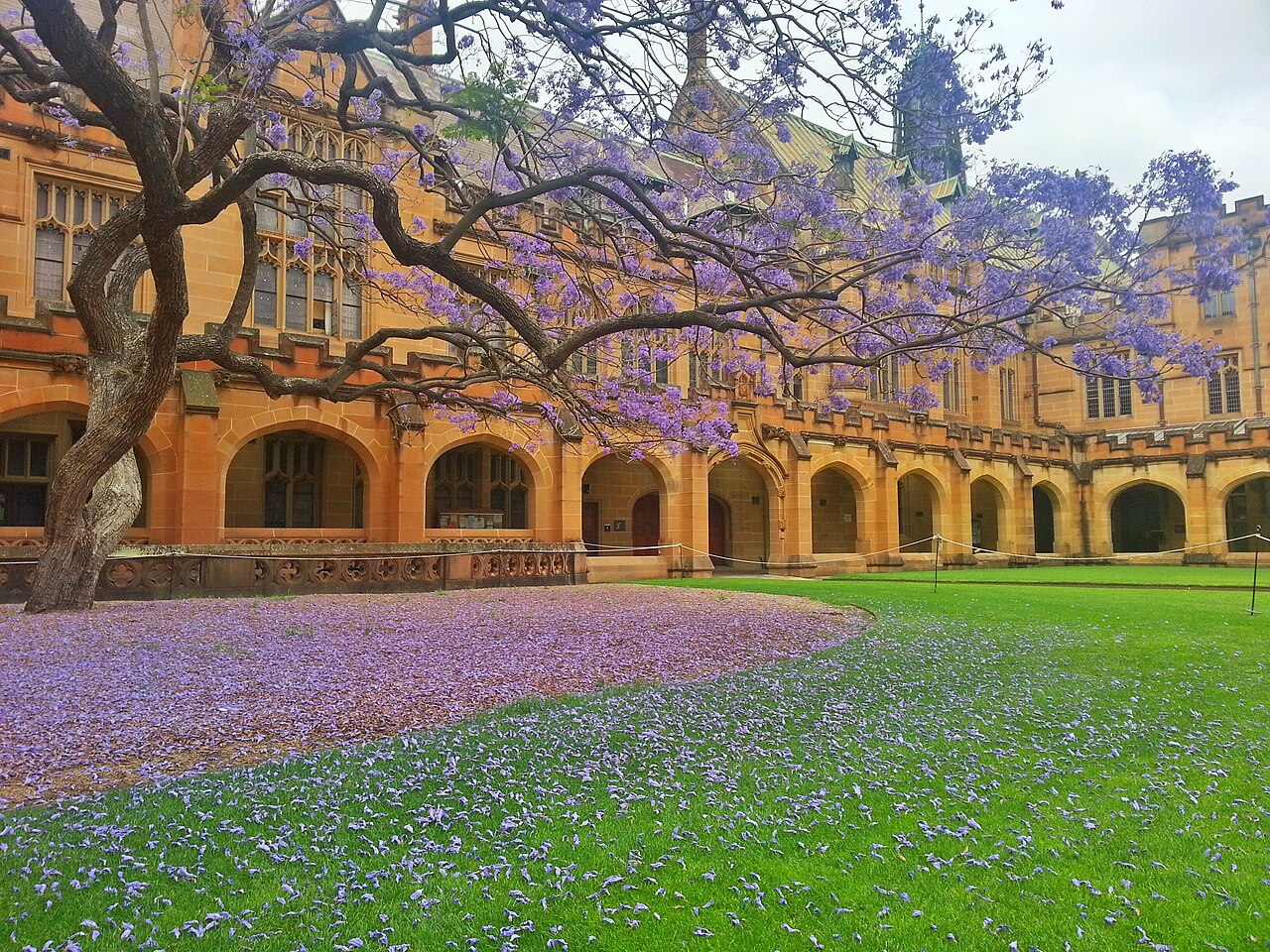
Whether you need a permit turns on the species as much as the height. These are real photographs of the trees that come up most often here — the ones that are protected, and the that council lists as undesirable and you can remove without asking.

Araucaria bidwillii
The signature tree of this region and the only common backyard tree with a genuine seasonal hazard — cones the size of a football, up to around ten kilograms, falling without warning through summer. Enormously significant to the Traditional Owners of the Bunya Mountains. Specialist removal; not a job for a ladder and a chainsaw.
Photo: John Robert McPherson, Wikimedia Commons, CC BY-SA 4.0

Araucaria cunninghamii
The bunya's relative, common through the region as both a remnant and a planted specimen. Very tall, straight, and dense-timbered. No cone hazard, but the same issue applies at removal: mature trees frequently exceed what can be dismantled without a crane.
Photo: Shillings1005, Wikimedia Commons, CC BY-SA 4.0

Cinnamomum camphora
Planted everywhere for shade decades ago and now the tree most often removed from older blocks. Large, shallow, aggressive roots that lift paving and get into old clay drains, and it will keep suckering from residual roots long after the stump is gone. Poor firewood — send it away rather than stacking it.
Photo: John Robert McPherson, Wikimedia Commons, CC BY-SA 4.0

Jacaranda mimosifolia
Part of Toowoomba's garden-city identity and a fixture of the spring streetscape. Brittle timber that drops limbs in storms, and a heavy flower and leaf drop that blocks gutters. Usually a pruning and clean-up job rather than a removal — and if it's on the footpath, it's council's.
Photo: Sarvapriya Prasad, Wikimedia Commons, CC BY-SA 4.0

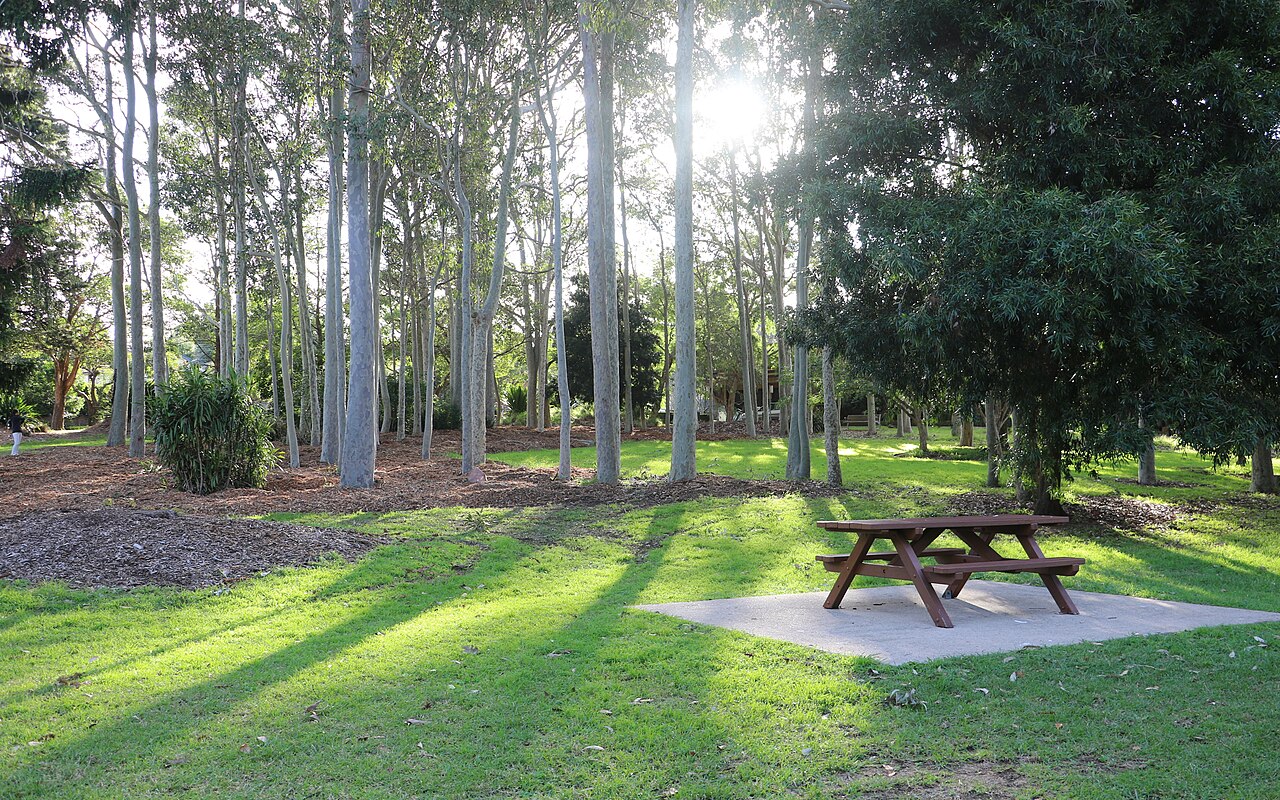
Corymbia maculata
Smooth dappled trunk, very tall, common in parks and larger blocks. Hollows form readily in mature specimens, which is worth knowing before assuming a dead one is a simple removal — hollows are habitat and take decades to form.
Photo: Poyt448, Peter Woodard, Wikimedia Commons, CC BY-SA 4.0

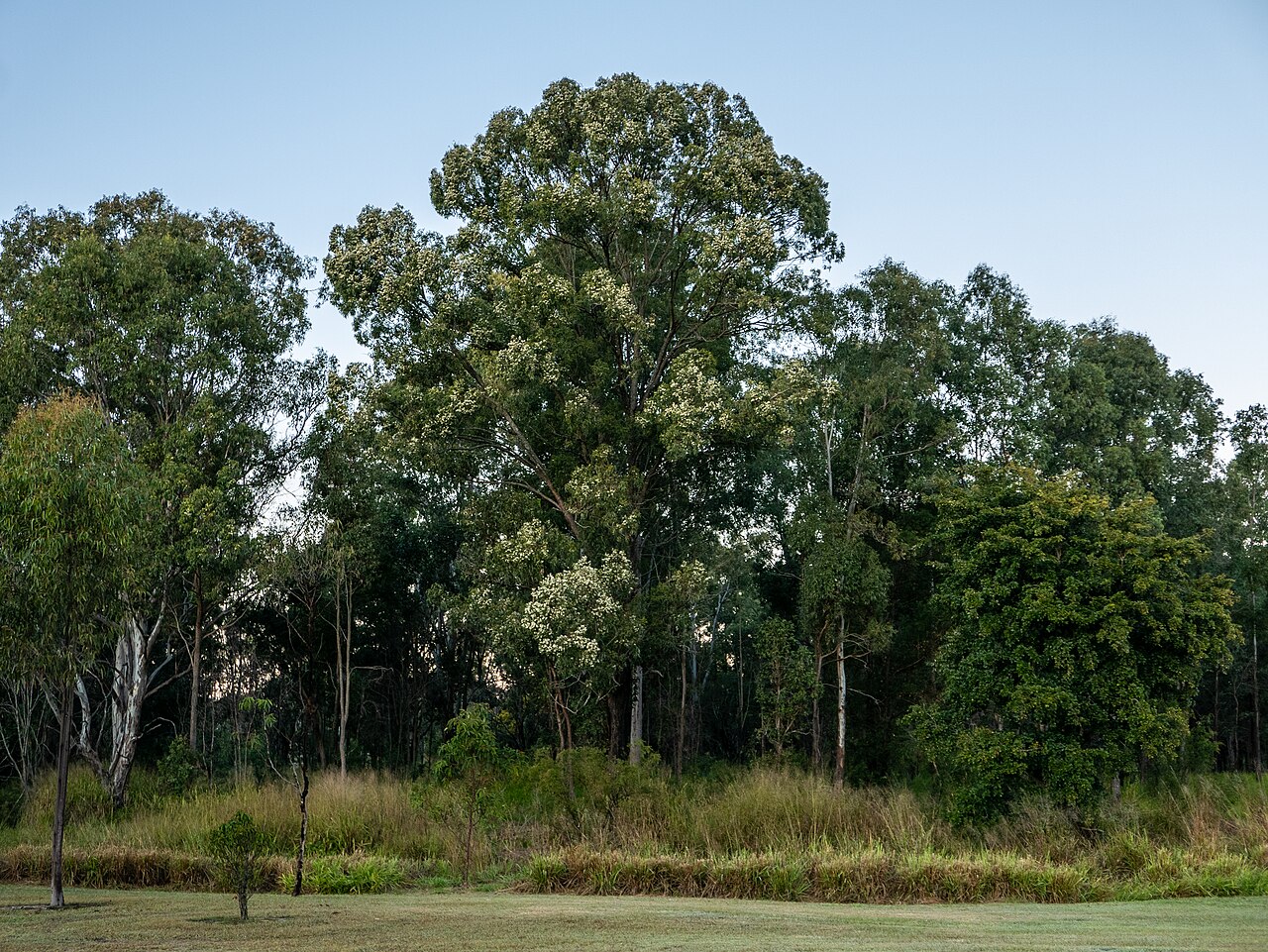
Eucalyptus tereticornis
Also called forest red gum. A big, long-lived local eucalypt found on remnant blocks and along watercourses. Sheds limbs in heat without much warning, and mature specimens routinely exceed what a climber alone can safely dismantle.
Photo: John Robert McPherson, Wikimedia Commons, CC BY-SA 4.0

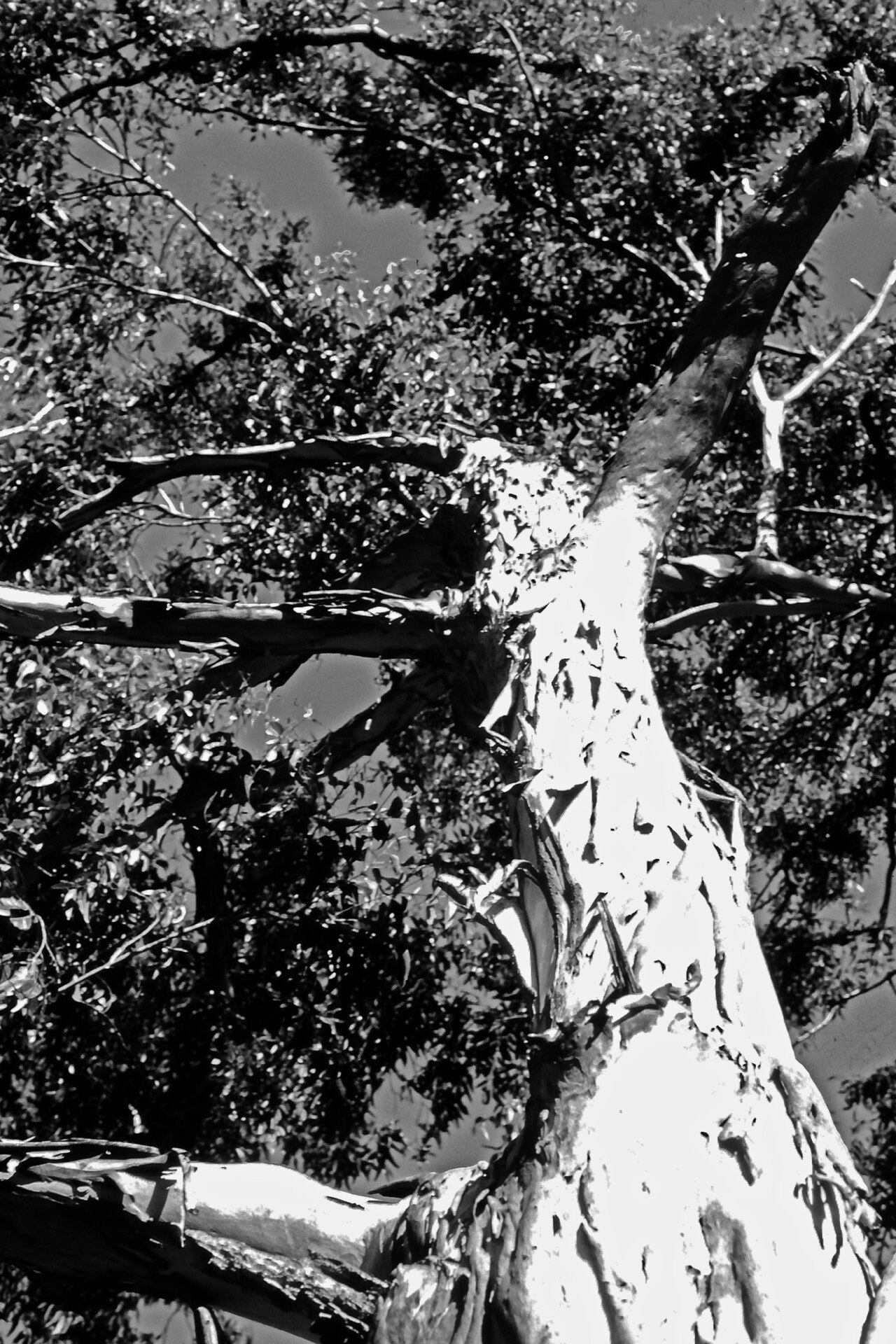
Eucalyptus crebra
Characteristic of the drier country around the Downs, with deeply furrowed dark bark that doesn't shed. Extremely hard, dense timber — slow work to cut and heavy to handle, which shows up in the quote on larger specimens.
Photo: John Robert McPherson, Wikimedia Commons, CC BY-SA 4.0

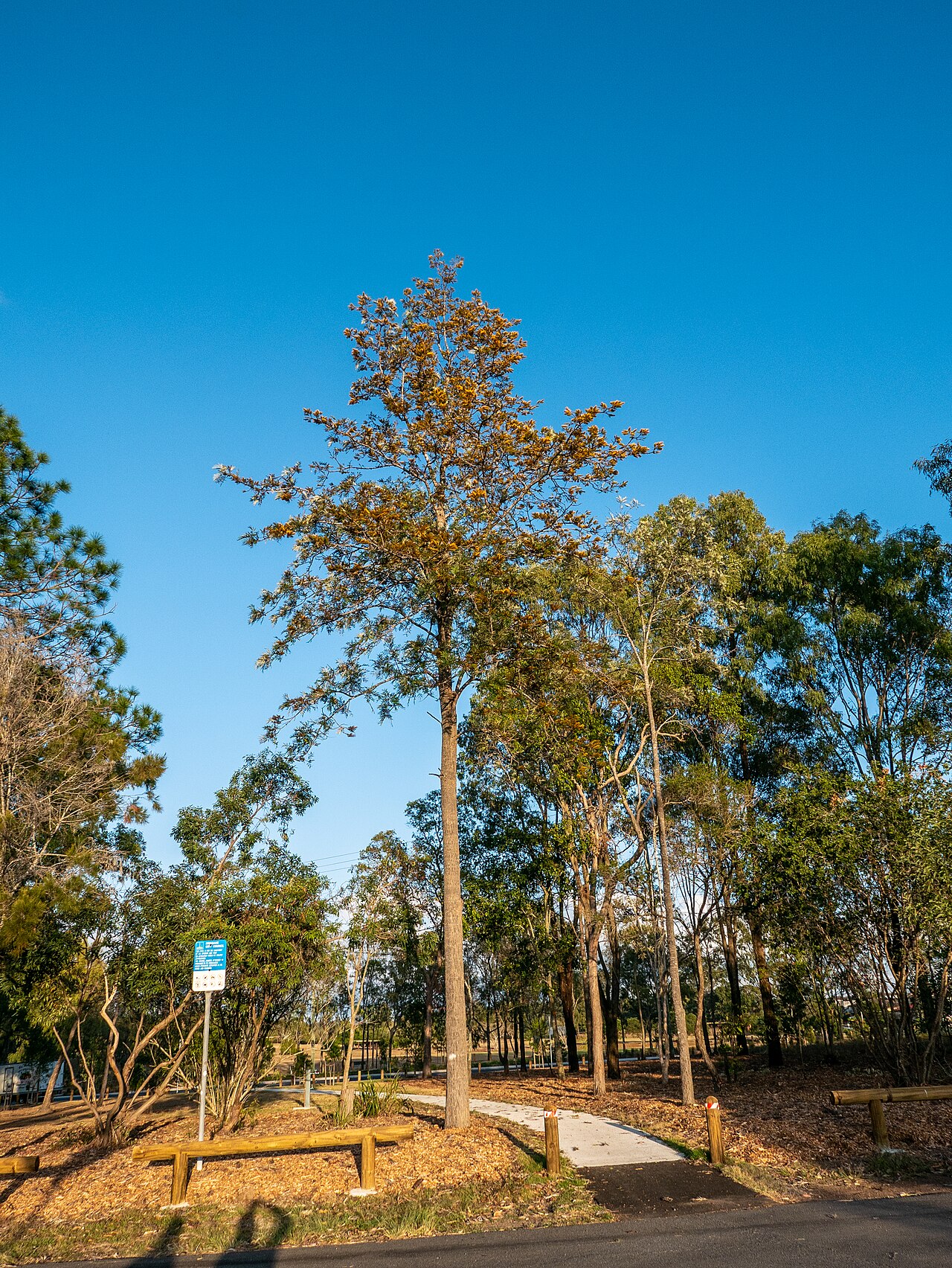
Grevillea robusta
Native, fast-growing and unmistakable in spring when it flowers golden. Widely planted as a street and garden tree. The timber is brittle for its size and it sheds limbs, so it's a regular on the storm-damage list.
Photo: John Robert McPherson, Wikimedia Commons, CC BY-SA 4.0
Photographs are licensed from Wikimedia Commons and credited individually. They're a guide, not an identification service — if you're not certain what your tree is, an arborist or council can tell you.
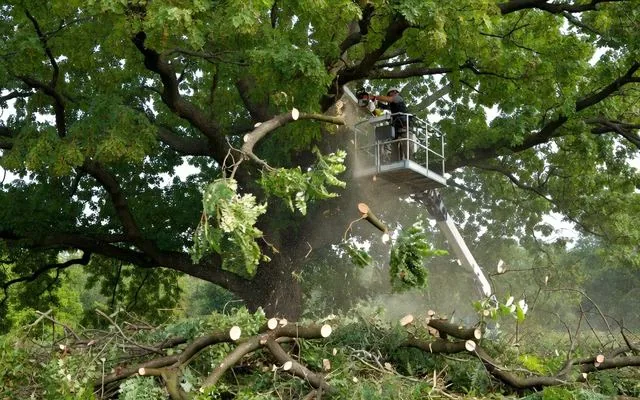
Bringing an overgrown canopy back under control — cut to standard, not just topped.
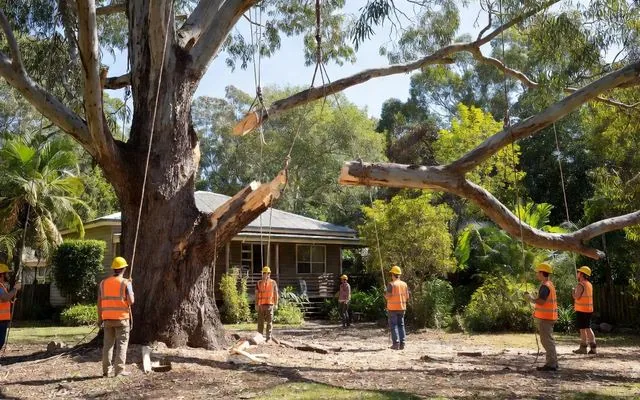
Full removal of trees that are dead, dangerous, lifting paving or outgrowing the block.
Written assessments for insurance, property sales, neighbour disputes and development.
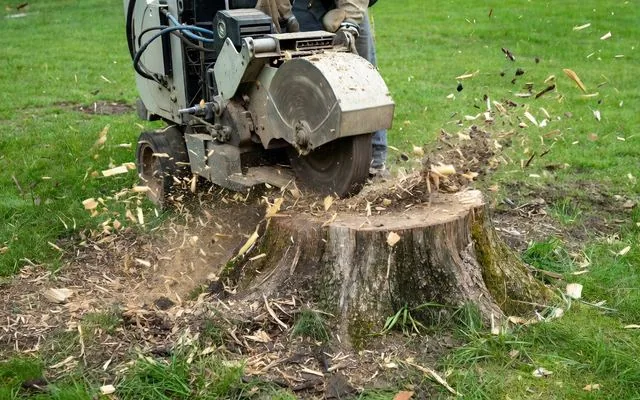
Grinding stumps out below grade so you can turf, pave or replant over the top.
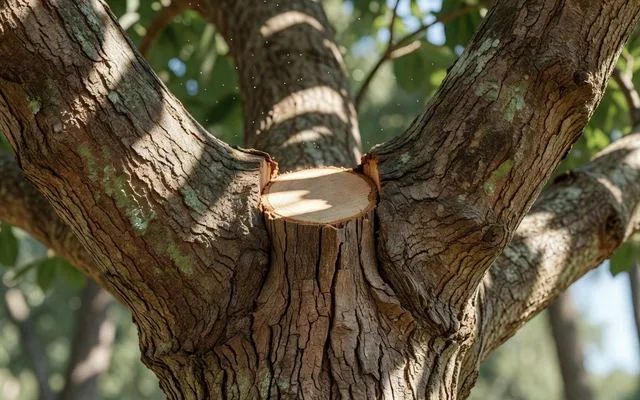
Structural pruning, deadwooding and clearance work done to Australian Standard.
Storm make-safe when something has come down on a roof, a car or across the drive.
Tell us the suburb and what the tree needs — we will match it to the right operator.
Call 0468 092 731